 Frederick L. Linderman
The Intervention
It was an unlikely pairing of souls in space and time, he and I. I was only four years into my mortal experience, while he was four years away from the end of his.
See moreShow less
He was careful and deliberate in his words and actions. My behavior and utterances came quickly and seemingly without prior reflection. Wisdom developed from a long life of experiences now guided his tongue and his decisions, while I yet blundered through life with reckless abandon, earning from the friends of my parents the nickname “Fearless McKinnis” and from my poor decisions many physical and emotional scars.
He had witnessed the end of the wild and untamed West and had lived through the Depression and two world wars. In my tender and isolated years I had witnessed very little beyond our home and neighborhood, the water striders in the narrow creek bordering our property, and the fireflies flickering about on summer nights. He had owned a fleet of clipper ships, carrying freight and passengers up and down the Pacific Coast. My most notable adventure was walking with my siblings the half-mile distance to the nearest five-and-dime store to buy a candy bar and then home again. Thus was the wide expanse between us. Nevertheless, our souls came together for those few days, and I am ever indebted to him for his intervention.
The year was probably 1952 and the place Falls Church, Virginia, just one of several stops in our journey as the family of an officer in the USAF. Tokyo, Japan, had preceded Virginia, and Orlando, Florida, would be next. Boulder, Colorado, would follow, and then Salina and Topeka, Kansas, at which point my father would retire after twenty-plus years.
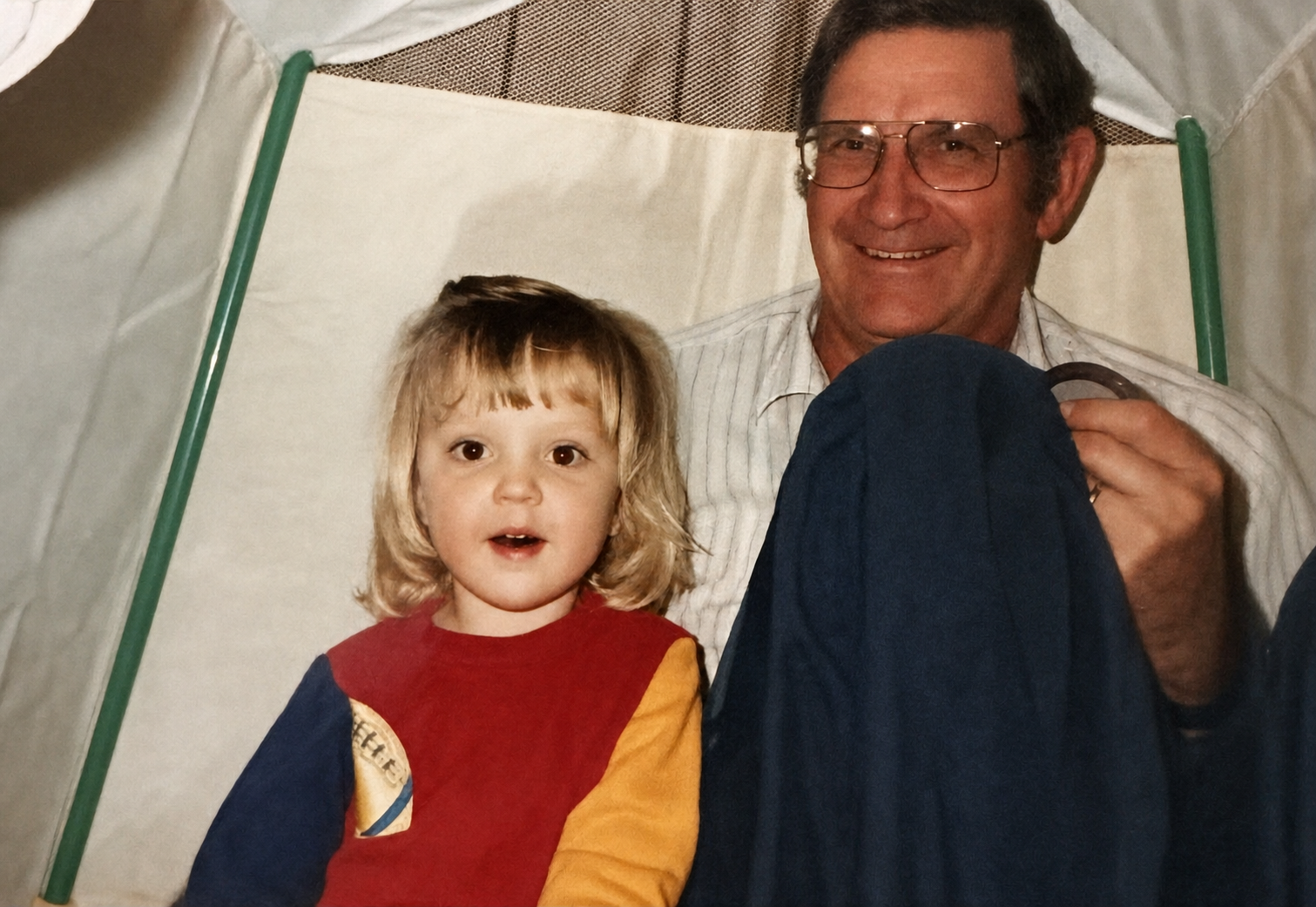
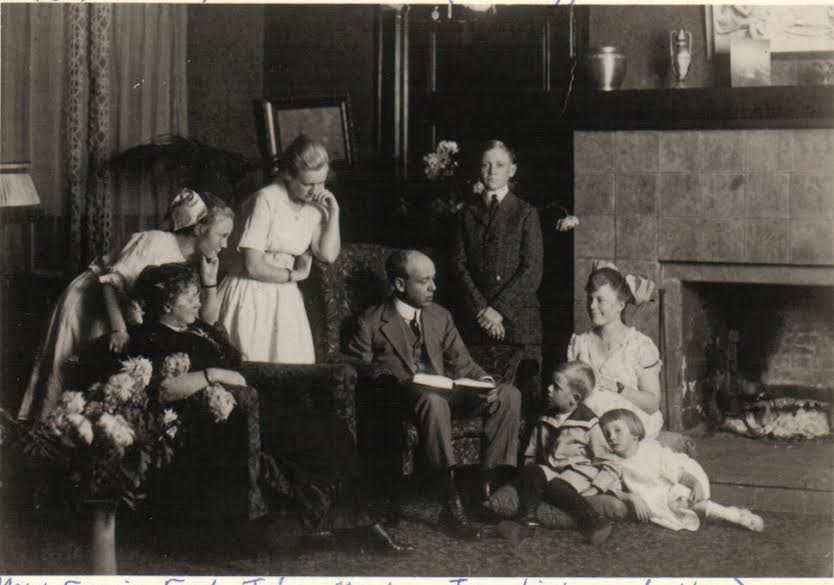
His name was Fred Linderman, but we knew him as Papa Linderman. He was my great-grandfather, the father of my mother’s mother. Together with two of his daughters, my great-aunts Mabel and Marion, Papa Linderman had made the long journey from the West Coast for a week-long visit at our home in Falls Church. Lacking the luxury of living close to our relations, I did not know Papa. In the mind of one very young and unfamiliar with family relations, he was effectively a stranger.
Falls Church was within ten miles of Washington, D.C., and all the historically rich sites of the colonial period, as well as the Smithsonian Museum and the many monuments to the nation’s early leaders. Aunts Mabel and Marion, in company with my parents, spent much of the week visiting the sites of their interest. However, Papa Linderman chose to spend his days at home with us.
His was a quiet presence, and I do not recall any direct interactions with him. His role, in the absence of our parents, was to care for us children, and he must have provided the necessary meals and such, but in doing so he certainly did not draw attention to himself. In fact, I cannot recall him speaking with me or anyone else, although reason demands that he participated in conversations during his visit.
On one of the days of the visit, while our parents and aunts were away on an excursion, my older sister Ann and I became engaged in an argument. I cannot recall the reason for the quarrel, but I suspect that I wanted to do something which she felt my parents would not permit. As the oldest child, in the absence of our parents, she must have considered it her responsibility to enforce “family law.”
As the disagreement progressed and tempers flared, in an incongruous move, I threatened to break one of the nearby small glass panes bordering both sides of the front door to the house. While reminding me that certain punishment would befall me for such a transgression, she dared me to do it. Her dare was too much to allow reason its rightful place in the matter, and I let my fist fly toward the glass. It gave way readily, cracking and sending small shards onto the floor and the concrete landing outside.
With the deed done, Ann happily reminded me of the impending return of my father and the severe punishment to be administered at his hand. Extreme fear and remorse quickly settled upon my entire being. I was not so much sorry for the damage done, nor for giving in to Ann’s challenge—after all, my pride was at stake—but I was very concerned and fearful for the punishment which awaited me.
Our father had a terrible temper and a very heavy hand whenever my brother or I was discovered to have violated family code. Dad seemed to take it personally. We had not simply broken a house rule; we had sinned against him. When he administered our due punishment, he was frightening. So I waited with fear and trembling what seemed an eternity for Justice to walk through that door with fury in his eyes and vengeance in his heart. Certainly, it would be the end of my life.
I did not see him leave the house to go to the hardware store, nor did I notice him searching the garage for needed materials and tools. I do not remember him uttering a single word of reproof in my direction. Nor, regrettably, do I recall voicing a word of thanks in his direction.
Yet ever imprinted on my memory is the scene of Papa Linderman silently applying and trimming putty around the edges of a new glass pane in the place of the broken one, this after meticulously pulling out the fragments of broken glass from the window frame and cleaning all of the bits and pieces from the floor and landing. Papa Linderman’s silence must have continued when my parents returned home. My father never mentioned the incident.
Through a simple act of kindness, Frederick L. Linderman, Papa, made it possible for mercy to be extended, justice to be satisfied, and punishment to be averted. I am forever grateful for that quiet and kind “stranger” who came to visit and did for me what I could not do for myself.